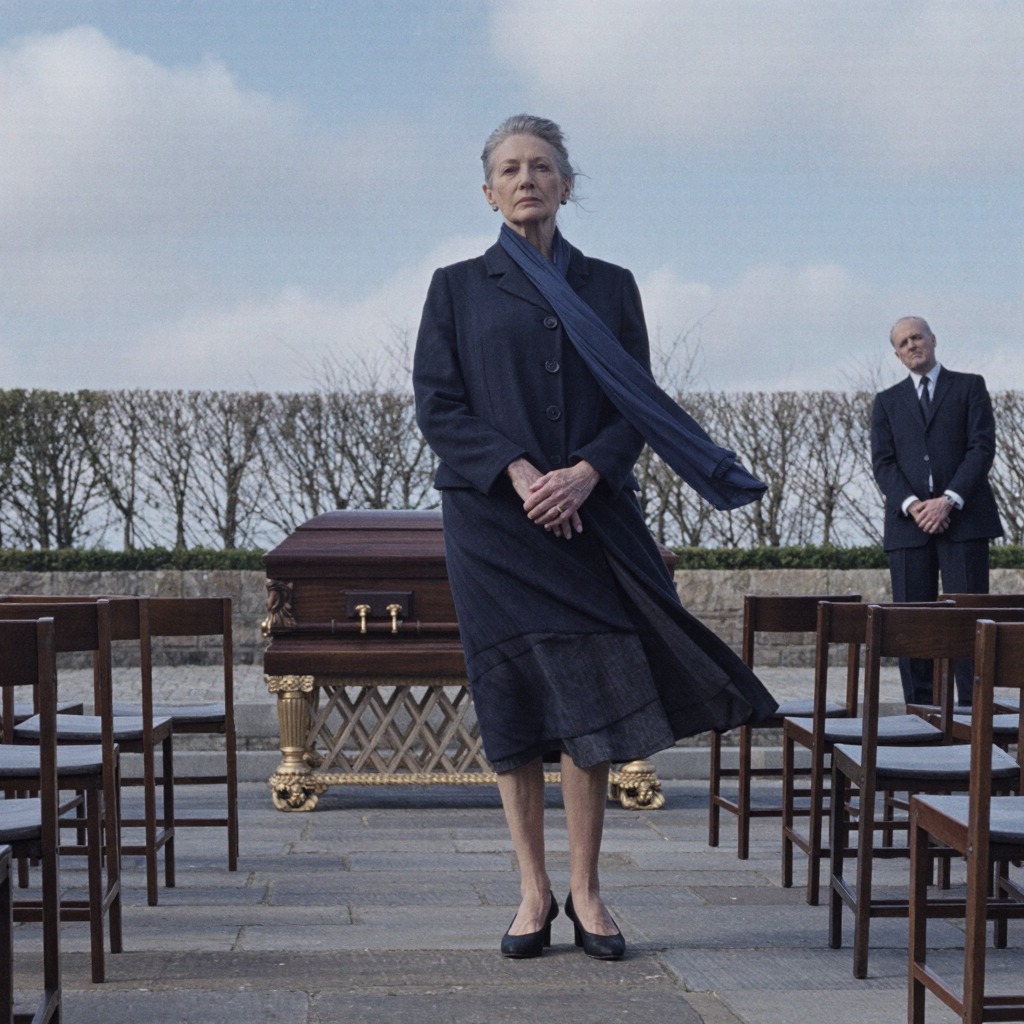
Just another piece of paper.
Too little, too late.
Peter’s Turn
Peter came the day after.
He knocked.
That alone set him apart.
I opened the door to find him and Meredith standing on the porch. He looked smaller than I remembered, shoulders less broad under his coat. Meredith’s smile was taut, lips stretched, the diamonds on her fingers catching the light when she lifted a hand in a practiced wave.
“Mom,” Peter said. “Can we come in?”
I stepped aside.
They took their old spots in the sitting room. They didn’t take off their coats.
“I heard from Celia,” he began. “And from Ethan.”
“I imagine you did,” I said.
“I think there’s been some confusion,” he said. “About the will.”
“No confusion,” I replied. “Just decisions.”
Meredith crossed her legs delicately, angling herself so the scarf around her neck fell just so.
“We understand this is a difficult time, May,” she said. “Emotions run high after a loss.”
“You didn’t come to the funeral,” I said.
She didn’t flinch. “I had a client dinner,” she said. “Very important deal. International.”
Peter cleared his throat.
“Mom, listen,” he said. “I should’ve called. I should’ve come. I just… I didn’t know how to.”
“No,” I said. “You didn’t know how to cancel your tee time. There’s a difference.”
He stared at his shoes.
“I waited,” I continued. “I sat in a room your father built, watched them lower him into the ground, and gave each of you every extra minute in case your conscience kicked in.”
I folded my hands in my lap.
“You didn’t come. Now you’re here because I changed paperwork. Not because you lost a father.”
“That’s not fair,” he said quietly.
“What’s fair,” I said, “is finally honoring what’s true.”
He exhaled, frustrated. “So that’s it? You’re just cutting us off?”
“You cut yourselves off,” I said. “I’m just acknowledging the facts.”
Meredith leaned forward slightly.
“This could get complicated,” she said. “Legally.”
“It won’t,” I said. “The paperwork’s clean. Thomas is very good at what he does. And I’ve had time to think.”
Peter looked up, eyes shining in a way that made him look like the boy in the fishing photo.
“I thought you forgave people,” he said.
“I do,” I said. “But forgiveness doesn’t mean access.”
They went silent after that.
They left with stiff goodbyes. There were no hugs.
After the door closed, my hands trembled. Not from doubt. Not from fear.
Release has a shake in it.
I sat by the window and watched the last light bleed out of the sky. The roses outside were nearly bare. Winter was close. George would have said, “They’ll bloom again.” I knew he was right.
But they would not be blooming for everyone.
The Bank and the Neighbor
At the bank, the air smelled like lemon cleaner and money.
“Mrs. Holloway,” the receptionist said, standing immediately. “Mr. Jansen will be right with you.”
I waited by the tall windows. Outside, people hurried along Main Street, hunched against the wind.
Richard Jansen appeared a moment later, sharp in a tailored suit, his tie perfectly straight.
“May,” he said warmly, taking my hand. “I was surprised by your message.”
“Good,” I said. “Surprise is good for you lot.”
He laughed and ushered me into his office. Glass walls, walnut desk, one framed photo of a floppy-eared dog. George would’ve liked that—one honest face in a place full of interest rates.
“I understand you want to make some changes,” Richard said, opening my file. “I see some notes from Mr. Fields.”
“I’ve already made them with my lawyer,” I said. “I’m here to ensure the bank carries them out without delay.”
He skimmed the notes, eyebrows rising.
“You’ve revoked all automatic transfers to Peter and Celia,” he said. “Removed them as beneficiaries. Set up an irrevocable trust for Ethan. That’s a significant shift.”
“I’m a significant woman,” I replied.
He chuckled. “That you are.”
“I want safeguards,” I said. “Ironclad. No appeals. No family representatives talking him into anything when I’m gone.”
“We can structure the trust to prevent that,” he said. “Distributions will be controlled and contingent until he’s thirty. Educational expenses, health care, housing. After that, full control, but with protections in place. Would you like a co-trustee?”
“No,” I said. “Ethan can hire a financial adviser if he wants one. The decisions should be his.”
He hesitated.
“You understand this can’t be undone easily,” he said.
“That’s the point,” I said.
We went over the forms. I initialed. I signed. Papers clicked neatly into folders.
“May,” he said softly as I rose to leave, “if I may… are you doing this out of anger?”
I thought about it, hand on the back of the chair.
“No,” I said. “I’m doing it out of clarity.”
He nodded slowly.
“That’s rare,” he said.
“No,” I corrected. “It’s just late.”
When I stepped onto the sidewalk, the afternoon light felt different. Cleaner. The air tasted like something had shifted, even though traffic still hummed and a teenager was still skateboarding badly across the street.
On a whim, I crossed to the coffee shop George and I used to duck into after errands. It had changed—new owners, younger staff, louder music—but the bones were the same.
I ordered a cappuccino and took a seat by the window.
Outside, a woman in her thirties pushed a stroller, talking to a friend. They laughed about daycare and deadlines.
I watched them pass and felt no envy.
Just recognition.
An old song I’d once known the words to.
Lorraine Campbell, two houses down, showed up at my door around five, carrying a tin of lemon shortbread and her usual no-nonsense curiosity.
“I saw Peter’s car here yesterday,” she said as soon as I opened the door. “Did he bring flowers or just excuses?”
“Neither,” I said. “He brought his wife and a suit.”
“Oh,” she huffed, stepping inside. “That one.”
We sat in the living room. I poured her tea—chamomile for her, strong black for me. The shortbread waited between us like a bribe.
“I told them,” I said after a while. “That they’re out of the will. That Ethan’s getting it all.”
“About damn time,” Lorraine muttered.
I raised an eyebrow.
“Sorry,” she said. “But someone had to say it. I’ve watched you chase their approval for years. Babysitting when you had your own doctor’s appointments. Writing checks while they took cruises. Smiling when they forgot your birthday.”
She shook her head.
“I kept thinking, ‘She’ll snap one day,’” she said. “Thank God you finally did.”
“I didn’t snap,” I said. “I peeled back everything that wasn’t love.”
She smiled. “Better phrased.”
We drank our tea. The refrigerator hummed. A car passed outside. The world didn’t dramatically shift to accommodate my newfound boundaries.
“Do you regret it?” she asked eventually.
I didn’t need to think.
“I regret not doing it sooner,” I said.
She opened the tin. The shortbread was perfect—crisp edges, sugar dusted, buttery in the middle.
“You know,” she said between bites, “my niece tried to get me to sell my house last spring. Said it was too much for me. ‘Move to one of those senior villas, Auntie. Everything’s done for you—laundry, meals, group outings.’”
She rolled her eyes.
“I told her I’d rather die in a house full of chipped mugs and my own silence than live in a place that smells like bleach and other people’s boredom.”
I laughed, really laughed, for the first time since George died.
Lorraine patted my knee.
“You and I,” she said, “we come from a generation that knows what endurance costs. We wore our spines down raising people who think love is measured in gifts and gratitude is optional.”
I nodded.
“You’re not cruel, May,” she added. “They’ll say you are. They’ll tell their friends you cut them off. But what they won’t say is that you’re the one who kept them afloat through every storm, even when they never asked if you were drowning.”
I blinked hard, but the tears sat politely in my eyes and went no further.
When she left, I hugged her longer than usual.
That night, I didn’t turn on the TV.
I took out an old letter George had written me during his first business trip, decades ago, tucked in the back of a drawer.
May, this house is never empty as long as you’re in it. You are the roof, the floorboards, and the lock on the door. Even when it feels like no one sees you, I do.
I read it three times and slid it back into its envelope.
The house felt quiet.
But not empty.
Not anymore.
Walking, Dancing, Remembering
See more on the next page
Advertisement
<
See more on the next page
Advertisement
