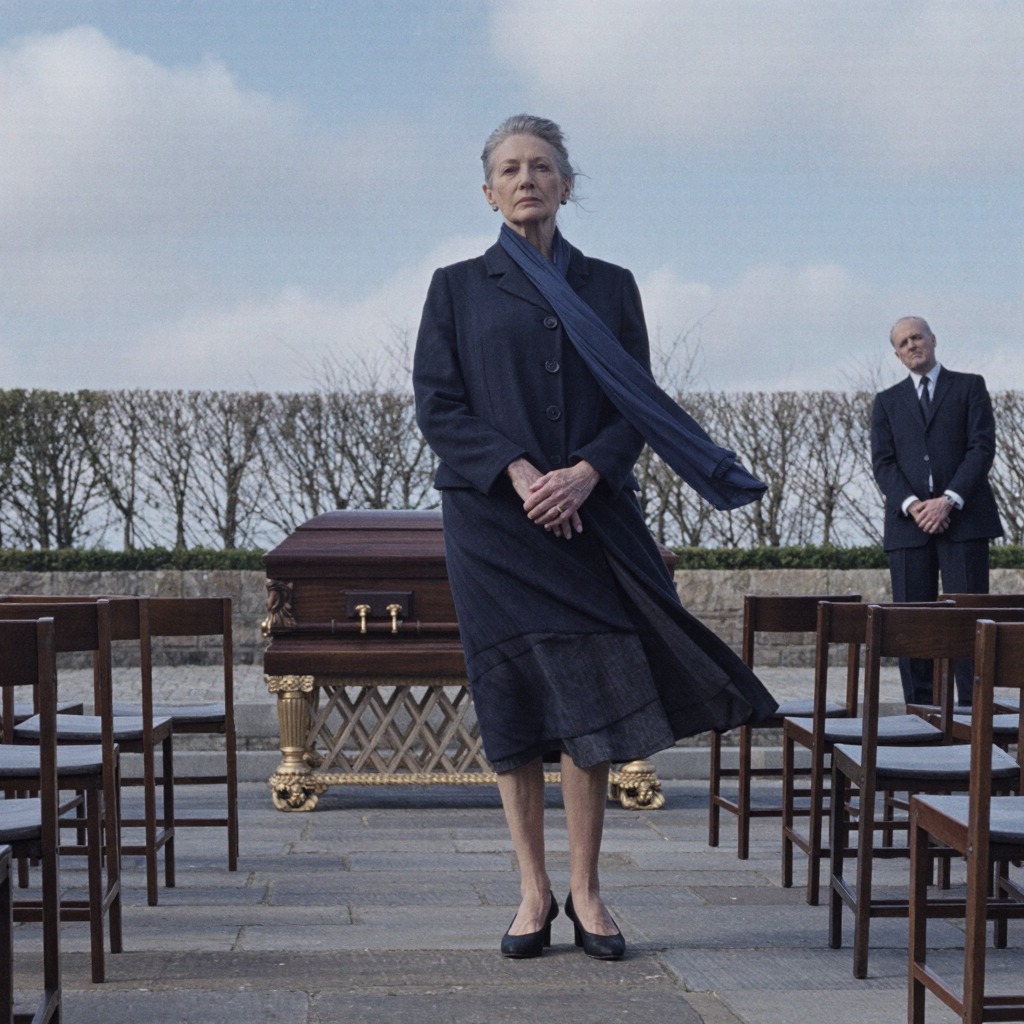
The call came just after noon, three days later.
“Grandma?”
Soft voice. Hesitant. Familiar.
“Ethan,” I said, closing the ledger I’d been reviewing. I’d been on the phone with the utility company about shutting off services to the lake cabin through the winter. It was one more thread I was slowly cutting.
“Everything all right?” I asked.
He cleared his throat. His silence hummed through the line.
“I… I heard about Grandpa,” he said. “I’m sorry I didn’t call sooner.”
I waited.
Not because I wanted to punish him.
Because I’d learned that if you gave people space, they’d tell you who they were.
“I didn’t know he passed until two days ago,” Ethan said quickly. “Mom didn’t tell me. She just said he was sick. I thought…”
He broke off.
“He passed almost three weeks ago,” I said gently.
“I know,” he whispered. “I’m so sorry, Grandma. I would have been there. I swear I would have.”
I believed him.
Shame doesn’t sound like that.
Lies don’t crack in the middle.
“I wanted to come see you,” he added. “If that’s okay.”
“Of course, it’s okay,” I said. “Come whenever you like.”
He arrived an hour later, taller than the last time I’d hugged him. A little unshaven, eyes rimmed with fatigue. He smelled like detergent and bus rides and worry.
His hug began uncertain—arms half-raised, as if braced for rejection. When I wrapped him up fully, he sighed and leaned into it.
“I’m glad you’re here,” I said, pulling back.
We sat in the living room. I poured him lemonade. He glanced around the room the way grieving people do, taking inventory of what has changed and what hasn’t.
“Mom said… she said you were coping,” he offered.
“Is that what she called it?” I said dryly.
He winced. “Did she really not come to the funeral?”
“She did not,” I said. “Nor did your uncle. Nor you—but that wasn’t your choice.”
He looked down at his glass, running his thumb along a frayed edge of the coaster.
“She told me they had work,” he said slowly. “That it was… handled.”
I said nothing.
“I should’ve known better,” he muttered.
“You know now,” I said.
He looked up.
“I want to do something,” he said suddenly. “For him. For you. Anything.”
“You’re doing it,” I said. “You’re here.”
He shook his head, unconvinced.
I hesitated, then rose and went to the dining table where the trust papers sat in a neat stack, unsigned but complete.
I carried a manila envelope back to the couch and handed it to him.
He opened it, eyes scanning the first lines, the title, the legalese indicating that he, Ethan Holloway, would inherit what George and I had built.
His head snapped up.
“Grandma,” he said, voice alarmed. “What is this?”
“My plan,” I said simply.
“This is… everything,” he said. “The house, the cabin, the accounts…”
“Yes,” I said.
“But why me?” His voice cracked. “Why not Mom or Uncle Peter?”
A hundred answers flashed through my mind.
Because they chose brunch and golf over their father’s funeral. Because they see me as a bank, not a person. Because you came without anyone nudging you. Because you remember how I take my tea. Because you mow my lawn in July just to spare my back.
I chose the gentlest truth.
“Because you’re the only one who came back without being called,” I said.
He stared at the papers. Then he set them down carefully, as if they were fragile.
“I don’t know what to say,” he murmured.
“You don’t have to say anything,” I said. “Just remember who you are. And remember what love looks like when it’s real.”
His eyes were wet now. He wiped them with his sleeve, like he had when he was small and refused to admit he was crying.
We sat together in silence. The same kind of quiet George and I used to share in the evenings when words weren’t necessary.
As Ethan stood to leave, he paused at the door.
“If I come over next weekend,” he said, “could we… make pancakes again? Like when I was a kid?”
I smiled fully for the first time in days.
“We’ll even use the good syrup,” I said.
Celia’s Visit
Celia showed up the next morning.
I knew she would. Not because she missed me. Not because she’d woken up with remorse.
Because I’d stopped answering her messages.
The tires of her black SUV crunched the gravel too fast, like she was late for something more important. She didn’t knock. She never had. She walked in as if the house held her name on the deed.
“Mom?” she called. “I’ve been trying to reach you.”
“I’ve been busy,” I said, folding laundry slowly in the living room.
“Busy with what?” she scoffed lightly, dropping her oversized handbag on the hall table.
Not How are you? Not How are you sleeping without him? Not I’m sorry I wasn’t there.
She poured herself a glass of water in the kitchen without asking, leaned against the counter, and pinned me with a stare.
“So,” she said, “is it true?”
I folded a towel in half, then in half again.
“What are you referring to?” I asked.
“Ethan says you’re changing your will,” she said. “To exclude Peter and me.”
“Yes,” I said. “That’s true.”
She laughed. Short. Bitter.
“Are you serious?” she demanded. “After everything we’ve done for you? Everything you’ve done for us?”
I put the towel on the stack and looked at her properly.
“You didn’t come to your father’s funeral,” I said. “You didn’t send flowers. You didn’t call. You didn’t even ask how it went.”
“I had an appointment,” she snapped. “My nails—”
“Your nails,” I repeated. “And then brunch.”
Her lips compressed. She knew I’d seen the photos.
“You want to talk about everything you’ve done for me?” I asked calmly. “You sent grocery lists and bills and school payments and mortgage notices. And I paid them. Quietly. Without asking for anything in return.”
“That’s what family does,” she shot back. “Helps each other.”
“No,” I said. “That’s what mothers do. And I did. For years.”
She fell silent, arms folding across her expensive blouse.
“Your father built this home with his hands,” I went on. “He didn’t have much, but he had pride. He taught you that respect is measured in actions. Not words. Not captions.”
I took a breath.
“And you couldn’t give him twenty minutes at the end.”
“That’s not fair,” she whispered, but there was no conviction in it.
“So yes,” I said. “You and Peter are out. Ethan will have what we leave. He’s the only one who ever remembered we are people, not institutions.”
“You’re punishing us,” she said, eyes narrowing.
“No,” I said softly. “I’m finally not punishing myself.”
She laughed again, voice high and brittle. “He’s a kid. What does he know about responsibility?”
“He knows how to show up,” I said. “I’ve learned that’s worth more than any check.”
Silence swelled between us.
For a moment, I thought she might cry. Or shout. Or say the words I hadn’t heard from her since she was ten: I’m sorry. I was wrong.
She didn’t.
She picked up her bag, slid her sunglasses into place.
“Well,” she said, chin tilting up, “I hope this makes you feel powerful.”
“No,” I said. “It makes me feel peaceful.”
She left without another word.
Later that day, I found a letter folded and slipped under my door. No envelope, my name in her rushed script.
You don’t understand what it’s like to balance everything. We tried our best. Maybe we failed, but cutting us out like this isn’t the answer.
I read it twice. Then I folded it and slid it into the drawer labeled MISCELLANEOUS.
That’s what it was now.
See more on the next page
Advertisement
