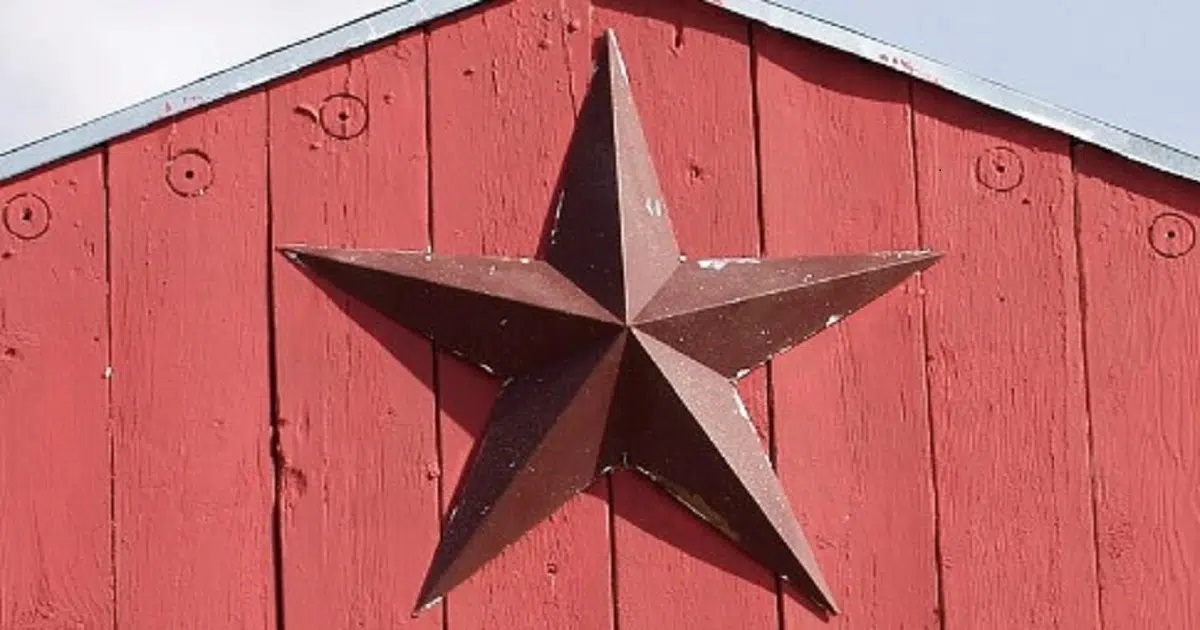
Some people believe that the specific design of each star, just like geometry or patterns, also meant more things. This was especially true with the more elaborate “hex signs”, which were basically painted mandalas instead of five-pointed stars. Whether they were magical symbols, expressions of faith, or simply folk art… well I guess that depended on who you talked to.
As time marched on, these stars took on more personal meanings. Some families used them almost as a signature. A well-made star could flaunt the skill of the person who made it. It was like saying, “Hey, I built this barn, and also made this star”. It was pride in craft. Identity. Eventually, they also became a way to mark a sense of home. A sort of visual shorthand for “We have been here a long time, and this is our place.”

Of course, these days you are just as likely to see barn stars somewhere on a suburban porch as you are in the country. They have gone full folk-chic. People use them in their interiors, on garden sheds, patios—you name it. I bet most people are not thinking about warding off evil spirits when they hang one up today. But even without the original intention intact, there is still a bit of comfort in them. They are nostalgic, perhaps a waft of heritage, maybe even a quiet reverence for the people who came before us. These people made their lives from hard work and hope.
See more on the next page
Advertisement
