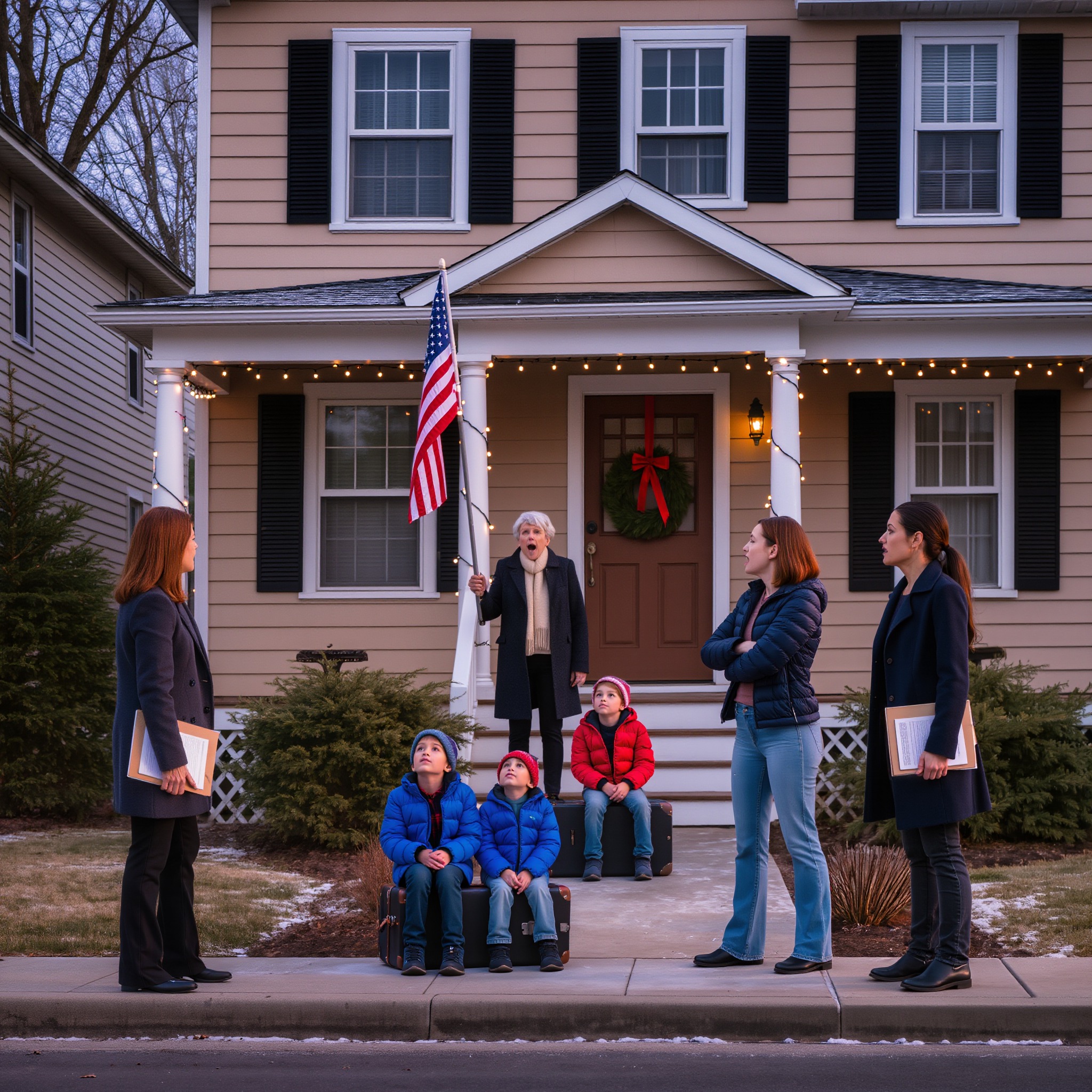
“Elena,” my mother’s voice crackled through the speaker, sharp and thin. “This is ridiculous. You can’t just… vanish. Your sister is exhausted, the kids are freezing, and you— I don’t recognize you. After everything we’ve done for you, this is how you repay us? Call me back. Immediately.”
There was no mention of the years I’d spent in that house, no mention of the doctor visits, the bills, the nights I slept in a chair outside my father’s room. Just a neat rewrite: after everything we’ve done for you.
I listened to the message twice. Then I pressed delete. My thumb hovered over the screen a second longer than it needed to. It felt like erasing an excuse I’d carried since childhood.
The next day, Ivy texted.
So you’re really doing this? Walking out on Mom? On us?
I stared at the words on the screen. The us she meant was new— her, the kids, and a mother who’d only ever looked at me fully when I was holding something she needed.
I typed out a reply slowly.
I’m not walking out. I’m moving out. I’ve been clear about that. I’m taking responsibility for my own life.
I deleted it. Too many words. Too much explaining.
Instead, I wrote:
I’ve moved. Mom has the documents. If there are practical questions about the house, please direct them to Adele.
I added Adele’s office number and hit send. Ivy’s response came fast.
Wow. Lawyer now? Really, Elena?
I locked my phone and set it face down. That small, flat rectangle had carried their expectations for years—answering every call, showing up every time they needed something. Now it lay silent on my table, and for once, the silence belonged to me.
In my new apartment, I learned the sounds of a life that didn’t revolve around someone else’s moods. The hum of the fridge. The soft clink of mugs in my own cabinets. The neighbor’s dog barking twice every night at exactly ten, as if reminding the building that time was still moving.
On Tuesday, I walked to the corner coffee shop a block away, a narrow place wedged between a laundromat and a florist. The barista had a small tattoo of a fern on her wrist. I watched her froth milk, the simple concentration on her face. When she slid the cup toward me, she smiled.
“Name for the order?”
“Elena,” I said.
She wrote it carefully on the side of the cup like it mattered. At home, my name had usually been shortened into a sigh.
I carried the coffee back to my apartment and set it on the windowsill. Bare branches brushed against the glass. Seattle’s winter light spilled in pale and indirect. I stood there longer than I needed to, hands wrapped around the warmth, feeling something unfamiliar settle in my chest. Not joy exactly. Not yet. Just the absence of dread.
A week later, I sat across from Adele in her office downtown. The walls were lined with shelves, not of law books like I’d imagined, but of plants and framed photographs—her kids at the beach, a dog in a ridiculous sweater, a candid shot of a group of women laughing with takeout boxes in their hands. Adele noticed me looking.
“Those are my reminders,” she said. “That people are more than the messes they bring into this room.”
She slid my folder closer, flipping through the pages I’d gathered: utility bills in my name, credit card statements showing grocery runs, invoices from the plumber and electrician. My handwriting in the corners of some pages—notes about which pipe had been replaced, which appointment I’d rescheduled so my mother wouldn’t miss it.
“You did all this?” she asked.
“Someone had to.”
“That’s not what I asked.”
I swallowed.
“Yes,” I said finally. “I did.”
Adele nodded once, as if confirming something she’d already guessed.
“You have options,” she said. “You could pursue reimbursement, a formal agreement about the house, even a claim for your share of its equity depending on how the deed and your father’s estate were handled. But I want you to be very honest with yourself about something.”
“What?”
“How much more of your life are you willing to spend in rooms where your value needs to be proven on paper?”
I looked down at the stack between us. Years of my life flattened into white sheets and black ink.
“I don’t know,” I admitted.
“Then we start small,” she said. “We protect you. We make it clear you’re no longer financially responsible for that house. We send a letter outlining what you’ve contributed, what you’re owed in principle, and what you are choosing to release. Not for them. For you. So when they rewrite the story, you have your own copy.”
“Will they listen?”
She gave a small, almost sympathetic smile.
“Probably not. But that’s not the point. The point is that you listen.”
That afternoon, I signed a stack of papers that didn’t tie me to the house, but to myself. Notices, formal letters, a clear line between my accounts and hers. When I left her office, the air outside felt sharper, more precise. I pulled my scarf tighter around my neck and walked slowly toward the bus stop, each step an argument against the part of me that still whispered I was abandoning someone.
That night, my mother left another voicemail. Her voice was wet with tears this time.
“How could you drag a lawyer into this? We’re family. Your father would be ashamed. I don’t understand what happened to you.”
I sat on the floor beside my father’s bookshelf, my back against the wood, and listened to the entire thing. When it ended, I didn’t cry. I didn’t call back. I opened the bottom cabinet of the bookshelf instead, the one that used to stick a little when we were kids.
Inside, there was a shoebox I hadn’t seen in years. The cardboard lid was dented at the corners. On top of the pile of old receipts and ticket stubs was a folded piece of paper, yellowed around the edges. My father’s handwriting crawled across it in the familiar, slightly tilted script I’d known since grade school.
Elena— start file for house repairs. Keep copies. You see details I miss.
The date at the top was from the year before he died, right around when he’d first started handing me envelopes, asking me to help him keep track of things. He hadn’t written anything like that for my mother or for Ivy. Just my name and a simple acknowledgment: you see details I miss.
I pressed the paper flat against my knee. For the first time since leaving the house, grief and relief arrived together, tangled but distinct. My father had seen me, even if quietly, even if only in the margins of bills and repair logs.
The calls kept coming, but they changed. My mother shifted from anger to pleading to cold practicality.
“Fine,” one voicemail said, the words clipped. “If you’re not coming back, at least come get the rest of your junk out of the garage. Ivy needs the space. Her car won’t fit.”
I pictured the warped photo albums, the boxes of holiday decorations I’d carefully labeled, the tools my father had taught me to use. My junk.
A week later, there was a text from an unfamiliar number.
Hey. It’s Mia. Mom gave me your number.
I stared at the screen for a long second before realizing. Ivy’s oldest. Thirteen. The last time I’d seen her, she’d been missing her front teeth and begging me to let her stir the brownie batter.
Hi, I wrote back.
Three dots appeared, disappeared, then appeared again.
Grandma’s really mad. She keeps saying you abandoned her. I just wanted to say I’m sorry she’s saying mean stuff. I liked when you lived there.
My throat tightened. I typed, erased, typed again.
Thank you for telling me that, Mia. None of this is your fault. I love you.
I hesitated, then added:
I’m okay. I hope you’re okay too.
Her reply was fast.
I’m fine. Just a lot of yelling. Grandma says I’m not allowed to talk to you about “adult problems.”
I closed my eyes for a second, imagining her in that house, hearing the same tone I’d grown up with, the same patterns curling around a new generation.
If you ever feel scared or unsafe, you can always call 911, I wrote, then deleted it. That wasn’t my role. Not anymore.
Instead, I texted:
When you’re older and you want to meet for coffee, I would like that. For now, listen to music when it gets loud, okay? It helped me.
She replied with a single heart emoji. It glowed on the screen like a small, stubborn light.
On Saturdays, Meera started coming over with pastries from the bakery near her place. She’d kick off her boots by the door, flop onto my couch, and talk about everything that had nothing to do with my mother: her impossible boss, the neighbor’s cat that had adopted her, a podcast she was obsessed with.
“You know,” she said one afternoon, crumbs dusting her leggings, “I’ve known you for five years, and I’ve never seen you sit still this much. It’s weird.”
“I’m sitting still all the time,” I protested.
She snorted.
“Not in your head. In your head you were always tracking something. Pill schedules, overdue notices, the sound of your name downstairs. Now you look like a person who’s figuring out what she actually likes.”
“What if I don’t know what I like?” I asked.
“Then that’s the fun part,” she said. “You get to find out.”
She dragged me to a ceramics class on a rainy Thursday, the kind of thing I’d always told myself I didn’t have time for. The room smelled like wet clay and coffee. People around us laughed at their lopsided mugs. My hands shook a little when I first touched the spinning wheel, the clay buckling under my palms.
“Relax,” the instructor said. “You’re not fixing anything here. You’re just making a mess on purpose.”
I let the clay wobble and collapse, reshaping it slowly. There was something quietly revolutionary about doing something badly and having it be fine. No one was going to yell. No one was going to ask why I hadn’t made it smooth enough for them to use.
On the bus ride home, my phone buzzed again. A long text from Ivy this time.
Mom says you’re trying to make her look crazy with that letter. She cried for two hours. You know she can’t handle stress. How could you do this right when we moved in?
I read it twice, fingers tightening on the cool metal pole of the bus. The old reflex was still there— the urge to explain, to soften, to reassure.
Instead, I scrolled up to the notes app where I’d written the script Adele had suggested.
I am not available for this conversation by text or phone. Any concerns about the house can be directed to Adele at [number]. I wish you well.
I copied, pasted, and sent it.
Three dots blinked, then vanished. No answer came.
Spring slid into the city slowly. The tree outside my window traded bare branches for new leaves, the kind that looked too fragile to survive the rain but did anyway. I started to recognize my neighbors: the older man in 3B who watered his plants with the same care I’d once given pill organizers, the woman down the hall who worked nights and left at dusk with a thermos and a paperback tucked under her arm.
One evening, I found a small sticky note on my door, written in neat, looping cursive.
Hi, I’m Lila in 4C. A few of us are having a potluck this Sunday in the courtyard. No pressure, but we’d love to meet you.
At my mother’s house, “family dinners” had always felt like exams I could fail by serving the wrong brand of mashed potatoes. The idea of eating with strangers purely for company felt… foreign.
On Sunday, I carried a store-bought salad down to the courtyard, embarrassed by its plastic bowl. People were already gathered under the string lights someone had hung between the fences—passing plates, trading stories, laughing at jokes that didn’t require anyone to be the punchline.
Lila waved me over.
“Elena, right? We saved you a chair.”
No one asked what I did for my family. No one measured my worth in favors already owed. They asked about my job, my hobbies, the book in my tote bag. I heard myself say things like, “I used to like hiking years ago,” and Lila immediately said, “Then you should come with us next weekend. No pressure. Just trees and bad trail snacks.”
That night, back in my apartment, I realized something small and enormous at the same time: for the first time in my life, I was starting to build a place where my presence wasn’t conditional.
Months passed before I drove past my mother’s house again. It was June by then. The hydrangeas along the front walk had exploded into blue and purple, like they did every year. There were chalk drawings on the driveway, a small pink scooter tipped over near the porch. The curtains in the front window were new.
I didn’t stop. I slowed just enough at the intersection to see Ivy through the glass, gesturing wildly about something as my mother stood in the kitchen, arms crossed. The scene looked familiar and distant all at once, like a show I used to watch and had finally stopped following.
At a red light three blocks away, my phone buzzed.
Unknown number.
I answered without thinking.
“Hello?”
There was a pause. Then my mother’s voice, softer than I’d heard it in a long time.
“Elena.”
See more on the next page
Advertisement
