“I think so. They said it wasn’t a full heart attack, just a warning.” He cleared his throat. “She keeps asking for you.”
There it was. The hook she’d used my whole life. The emergency that justified overlooking every smaller wound.
“Do you want to go?” he asked.
Not, She needs you. Not, You have to. Just, Do you want to?
I stared at the rug, at the little frayed corner my landlord refused to replace. Did I want to go?
The truth came, quiet and clear. “I don’t know.”
“I told her I’d ask,” he said. “No pressure. I mean it.”
I believed him. That was new.
“Give me an hour,” I said.
I hung up and walked to the window. August light painted long, tired streaks across the parking lot. Somewhere below, a dog barked twice. I pressed my palm to the glass and closed my eyes.
Did seeing her in a hospital erase everything she’d said and done? No. Did it make me heartless if I stayed home? Also no. Both things could be true: she had hurt me deeply, and she was also a human being whose heart was reminding her she was mortal.
I made another cup of tea. Sat at my table. Watched the steam curl up and disappear.
Eventually, I realized the question wasn’t, Do I owe her this? It was, Can I do this without abandoning myself?
I called my therapist—yes, by then I had one—and left a rambling voicemail. I didn’t ask for permission. I just said the words out loud. “I think I’m going to visit my mother in the hospital. I’m going to set a time limit. I’m going to leave if she starts blaming me. I’m not going to let her rewrite what happened.”
Then I texted my brother.
I’ll come. One hour.
The hospital smelled like every hospital I’d ever walked into: antiseptic, coffee, something fried from the cafeteria that didn’t quite mask the metallic undercurrent of medicine and fear. I followed the signs to cardiology, my footsteps too loud in the hallway.
She looked smaller in the bed. Age had sharpened her features, but the oxygen tube looped over her ears made her look almost fragile. My brother sat in the corner chair, phone in hand, eyes darting up when I walked in.
“Nora,” my mother breathed.
I stood just inside the doorway for a moment, letting the air settle around me. The old script tugged at my ankles like invisible strings—rush to her side, apologize, promise to behave.
I didn’t move until I chose to.
“Hi, Mom,” I said, stepping closer. I stopped an arm’s length from the bed, enough to see her clearly, not so close I could be grabbed emotionally or physically.
She blinked hard, eyes shining with unshed tears. “You came.”
“I did,” I said. “For an hour.”
Something flickered across her face at that. A bruise to her control. She adjusted the blanket over her lap, a nervous habit in a new setting.
“They said it was… stress,” she said. “My heart.”
I hummed lightly. “Sounds about right.”
Her gaze snapped to mine, sharp, defensive. For a second, I saw the old version of her, the one who would attack before ever admitting vulnerability. But the beeping monitor beside her and the IV in her arm softened the edges.
“You don’t have to worry,” she added quickly, as if she could still protect her image even now. “I’m not dying or anything.”
I didn’t tell her I had worried, in my own complicated way. I just nodded.
We talked about the doctors first. About the tests they ran, the medications they mentioned. Normal, safe topics. My brother chimed in occasionally, filling the space when things got too quiet.
But eventually, inevitably, we landed on Christmas.
“I keep thinking about that night,” she said, eyes drifting to the foot of the bed. “Everyone keeps replaying it for me.”
Of course they did. The performance never needed cameras. It lived in retellings, in who got cast as villain or victim.
“You said you were ashamed of me,” I reminded her gently. “In front of everyone.”
She flinched, just slightly. “I was drunk.”
“You weren’t that drunk,” I said. My voice stayed calm. “And even if you were, drunk words are still words. They come from somewhere.”
Her eyes filled, the tears finally spilling over. “I was angry,” she whispered. “You were late, you didn’t help, you acted like you were above everyone. It felt like… like you were punishing me.”
I took a breath. “I was protecting myself.”
From what, she almost asked. I watched the question form, then die, then form again. Years of denial wrestling with a rare, unstable honesty.
“You humiliated me,” she said, but it sounded weaker now, like even she didn’t fully believe it.
“No,” I said. “I told the truth you’ve spent your whole life trying to cover up.”
Silence. The monitor beeped steadily between us.
“I never hit you,” she said softly, resorting to the oldest shield. “I never left. I was always there.”
I nodded. “You were. Physically. And you made sure we knew how much worse it could have been.”
She opened her mouth, then closed it. The tears kept coming.
“You called me a failure when I was twelve because I got a B in math,” I continued quietly. “You told Aunt Carol I embarrassed you because I didn’t wear makeup to Thanksgiving. You told my college roommate I was ‘lucky they accepted me at all.’ You laughed when I said I wanted to start a company. You told people I was unstable when I finally moved out. You might not have broken bones, Mom, but you broke a lot of other things.”
My brother stared at the floor. I could see his jaw working, absorbing truths he’d half-heard over the years but never let himself fully acknowledge.
My mother’s fingers twisted in the blanket. “I thought… I thought if I pushed you, you’d be strong,” she whispered. “My mother was worse. She was… cruel. I swore I’d never be like her. So I… I tried to toughen you up instead.”
“And in doing that,” I said gently, “you became like her in ways you didn’t want to see.”
She let out a sound that wasn’t quite a sob, more like something breaking open.
I didn’t reach for her hand. That’s the part people always stumble over when I tell this story. Why didn’t you comfort her? Why didn’t you tell her it was okay?
Because it wasn’t okay.
Because my job was not to soothe her guilt.
Because if I reached across that gap too quickly, I’d be building a bridge back to my own erasure.
“I’m not saying this to punish you,” I added. “I’m saying it because if we ever have any kind of relationship, it has to be based on reality. Not the stories you tell guests. Not the version where you’re the perfect mother and I’m the ungrateful daughter.”
She took a shuddering breath. “I don’t know how to be anything else.”
There was the truest thing she’d ever said.
“I know,” I said quietly. “That’s your work now.”
Her eyes searched my face, looking for the old script, the old role where I rushed in with forgiveness before she’d even finished apologizing—if she apologized at all.
“Do you… hate me?” she asked.
I thought about all the nights I’d lain awake as a teenager, staring at the ceiling, wondering what was so wrong with me that my own mother seemed disgusted by my existence. I thought about the Christmases where I held my breath at the dinner table, trying not to spill anything, say anything, be anything that could be used as evidence. I thought about the younger version of me with the crayon drawing in her hand, staring at an empty fridge.
“No,” I said. “I don’t hate you.”
She cried harder at that, like those were the words she’d been desperate for.
“But I don’t trust you,” I continued. “Not yet. Maybe not ever in the way you want.”
Her gaze snapped to mine again. The hurt was almost childlike. “I’m your mother.”
“And I’m your daughter,” I said steadily. “Not your mirror. Not your shield. Not your villain. If you want a relationship with me, it has to be one where you see me as an actual person and not just a reflection of whether you did a good job.”
We sat in the echo of that for a long time. Nurses passed in the hallway. Somewhere down the ward, a TV played a game show.
“I don’t know if I can do that,” she whispered.
“I know,” I said. “And I don’t know if I can be close to you. But I do know I won’t lie about how things were just to make your last years more comfortable.”
Her eyes closed, as if the weight of that honesty was too much and also exactly what she’d needed to hear.
“I’m tired,” she murmured.
“I’ll go soon,” I said. “I just wanted to see you with my own eyes and say this while we still have time.”
“Will you… will you come for Christmas?” she asked, barely louder than the hum of the machines.
“I don’t know,” I said. “Maybe. Maybe not. If I do, it’ll be on my terms.”
She nodded, a tiny, broken motion.
When I left the hospital, the sun was low, turning the parking lot into a patchwork of gold and shadow. I stood by my car for a moment, letting the warm air curl around me. I didn’t feel triumphant. I didn’t feel destroyed either. I felt something new.
Untangled.
On the next episode of Echoes of Life, I didn’t tell the story of the hospital right away. I talked instead about how complicated it is to visit someone who’s hurt you when they’re suddenly fragile. How people rush to protect the image of “good child” even if it means stepping back into the fire. I talked about compassion that doesn’t require contact, about love that can exist from a distance, about how sometimes the most loving thing you can do for everyone involved is refuse to pretend anymore.
The comments poured in.
“I needed this today.”
“I’m sitting outside a nursing home crying in my car.”
“My mom is in hospice and I thought I was evil for not wanting to be there every second.”
I read each one, fingers hovering above the keyboard, responding when I had the emotional space, letting silence be my answer when I didn’t. I learned that boundaries aren’t just for families. They’re for the internet too.
Years passed. Not quickly. Not in a neat montage. Just one day after another. Some days my mother texted me little things—photos of the dog, a recipe she thought I might like, an old picture she found in a drawer. Sometimes I answered. Sometimes I didn’t.
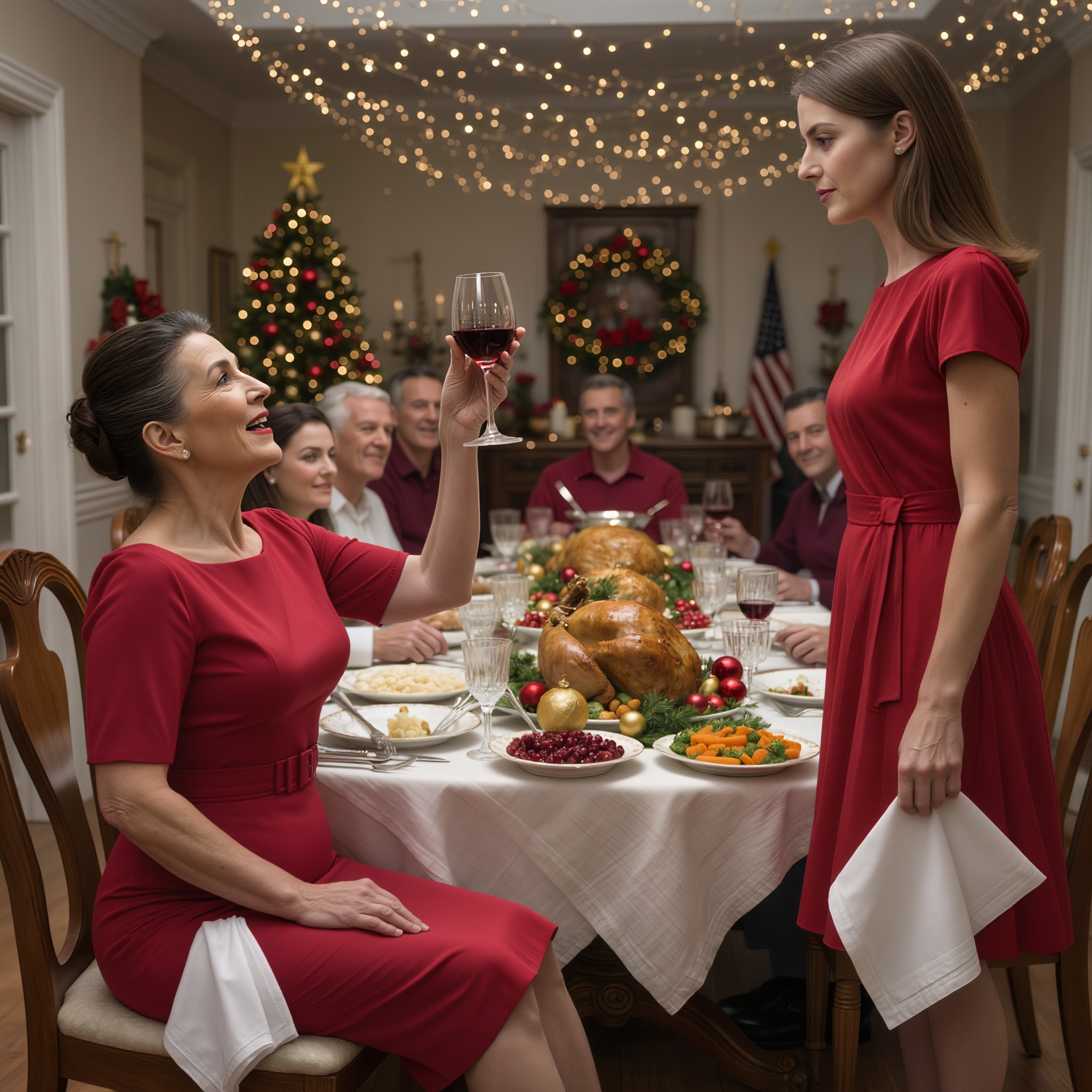
One Thanksgiving, she sent me a photo of the dining room. The table was set, the same old dishes, the same centerpiece. But there were fewer seats than before. Kids grown, relatives gone, people moved away. She had placed a candle at the end of the table where I used to sit.
See more on the next page
Advertisement
