Coffee poured; conversation resumed. The Whitmores listened more than they spoke. Ruth offered a few short stories—young sailors writing letters home, holding hands with patients through long nights, learning that compassion never made her weaker. Her words carried the kind of weight years give you—gentle, wise, unforgettable.
Before she left, she turned to Tom and Linda. “You raised a son who picked a good woman,” she said softly. “Don’t mistake duty for distance. The world needs people like her.”
When the door closed behind her, the house felt different—quieter, warmer. Linda stood for a moment, staring at nothing in particular.
“She’s remarkable,” she said softly.
“Yeah,” I said. “She is.”
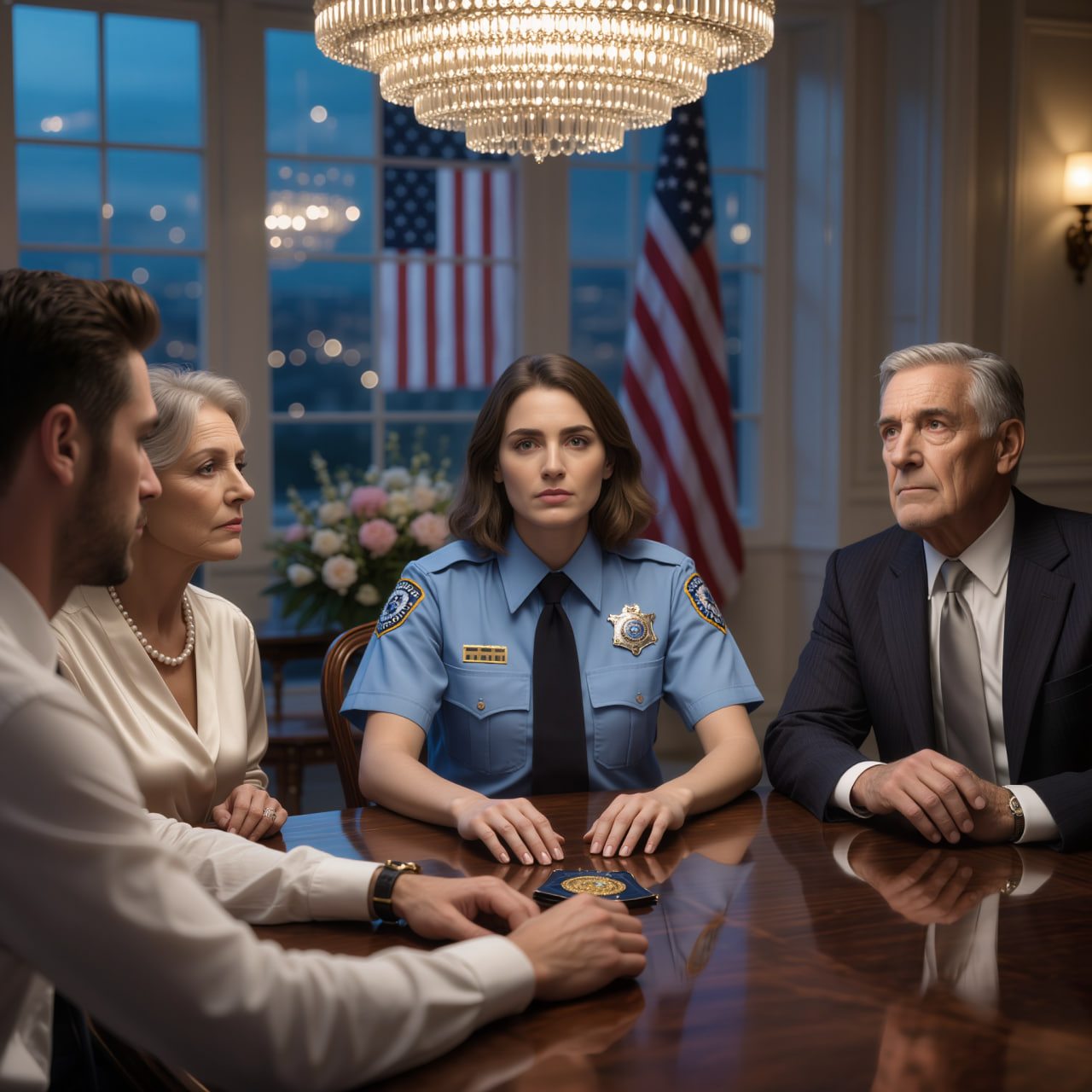
No one spoke for several seconds. Candlelight flickered, throwing long, soft shadows across the table. For the first time that night, no one looked at my sleeve.
The air that had felt stiff and formal now hung soft with the faint smell of coffee and wax. Evan brushed my arm under the table, a quiet, reassuring touch. His parents were both silent, though for once the silence didn’t feel like disapproval. It felt like thinking.
Linda finally spoke, voice low, eyes still on the door. “That woman—she had a presence. You could tell she’s seen the world.”
Tom nodded. “Navy, she said. Served back when my brother did.”
Evan looked up, surprised. “I didn’t know Uncle Robert was in Vietnam.”
Tom hesitated—the kind of hesitation that means someone’s remembering something painful. “He didn’t like to talk about it. Said he came home different. Nervous. Drank too much for a while. My parents tried to help, but you didn’t talk about those things back then.”
Linda set her cup down gently. “I suppose that’s why this evening hit me so hard.”
“What do you mean?” I asked.
She gave me a small, rueful smile. “When I hear the word police, I don’t just think of law and order. I think of danger—of people running toward the very things the rest of us run away from. After what happened to Tom’s brother, the worry just… stuck.” Her words came carefully, but honestly. For the first time all evening, her eyes met mine without guarded distance. “When Evan told us you were an officer, I imagined…” She trailed off and shook her head. “I imagined sirens and danger—not kindness on a roadside.”
Tom cleared his throat, his deep voice quieting the room. “I owe you an apology,” he said, meeting my gaze. “I misjudged you. I thought what you did was just a job—enforcing rules, keeping order. But what that woman said…” He searched for words. “You saw a stranger who needed help, and you didn’t ask who she was before you acted. That’s character. That’s service.”
I kept it simple. “Thank you, sir.”
Evan grinned, tension finally melting from his shoulders. “See, Mom, Dad? I told you she was the real deal.”
Linda smiled faintly. “Yes, dear. You were right.”
There was laughter then—not loud, but genuine. The kind that starts small and grows easy. Tom leaned back.
“You know,” he said, glancing at me, “I still worry about safety. That’s never going away. But hearing that woman talk about what you did… I suppose danger isn’t the only thing in your line of work. There’s grace, too.”
I smiled. “There’s a lot of paperwork too, sir. Grace is what keeps us sane through it.”
Evan chuckled. Linda actually laughed—a light sound that made her seem ten years younger. She rose, refilled my coffee without asking, and set a hand gently on my shoulder.
“You must see some awful things,” she said softly.
“Sometimes,” I admitted. “But the truth is, we see more good than bad. Neighbors helping neighbors. Veterans watching out for kids at the bus stop. Families sticking together when everything goes wrong. It isn’t all tragedy. It’s people trying.”
She nodded slowly, her hand still resting on my shoulder. “I like that—people trying.”
For the first time, it felt like we were having a real conversation, not an interview. Titles fell away: officer, parent, guest. We were just people around a table. Ruth had cracked something open in all of us—a reminder that service isn’t about rank or job or even courage. It’s about showing up.
Tom walked to a cabinet near the dining‑room window, opened a drawer, and took out a small wooden box. He placed it on the table in front of me.
“This was my brother’s,” he said. “A medal he earned overseas. He kept it hidden for years because he didn’t think anyone cared. When he passed, I took it to remember him. I don’t usually show it to people.” He opened the lid, revealing a tarnished bronze medal inside. “Tonight reminded me there are still people who live with that kind of integrity. People who don’t wait to be thanked.”
“That’s very kind of you,” I said, taken aback.
He smiled faintly. “Don’t thank me. Just keep being who you are.”
Linda reached for her glass. “If this evening taught me anything,” she said softly, “it’s that first impressions are not to be trusted. I thought I was meeting a cop. Turns out I was meeting someone who leads with her heart.”
Emotion rose in my chest. I’m not the type to cry easily, but there was something about the sincerity in her voice—the way she said leads with her heart—that tightened my throat. Ruth’s words echoed: Sometimes being late puts you right on time.
Dinner stretched into another hour of easy conversation. Tom told stories from his youth. Linda laughed at Evan’s college mishaps. For the first time, I felt like part of the room instead of an intruder. As we stood to say good night, Linda surprised me by hugging me lightly.
“Thank you for being patient with us,” she whispered. “And for what you did for that woman. I think I needed to see that.”
“We all need reminders sometimes,” I said.
Tom extended his hand again—warm now, steady. “We’d like to have you over again soon,” he said. “Maybe next time we’ll cook something for you.”
“Only if I’m allowed to bring dessert again,” I smiled.
“Deal,” he grinned.
Outside, the Virginia night felt cool and forgiving. The moonlight spilled across the lawn. The night that began with judgment had ended with understanding—and maybe that was the real kind of justice.
The days after unfolded like slow sunlight after rain—warm, cautious, new. No grand apologies. No dramatic confessions. What changed was quieter.
Tom began calling me by name instead of Officer. Linda started sending small texts through Evan—recipes, church announcements, a reminder that the annual VFW pancake breakfast was coming up and they could always use volunteers. It was her way of saying, I see you differently now.
That Saturday, I took her up on it. I showed up at the VFW hall early, in jeans and a hoodie, hair pulled back, ready to flip pancakes for a veterans’ fundraiser. The place smelled of syrup, bacon, and community coffee brewed in a metal urn older than me. Ruth was there, of course, at the sign‑in table in her Navy cap and unstoppable energy.
When she spotted me, her face broke into a grin. “Officer Hayes—or do I get to call you Clare now?”
“You’ve earned it,” I said, hugging her lightly.
She winked. “Then it’s Ruth. And don’t call me ‘ma’am’ unless I outrank you.”
Linda and Tom arrived twenty minutes later, wearing matching volunteer aprons that read Serving Those Who Served. The look on their faces when they saw Ruth and me already at the griddle was priceless—surprise first, then a shy sort of pride.
“Morning,” I called. “Hope you brought an appetite.”
“We did,” Linda said nervously, “but it looks like we might have to earn it.”
Ruth handed her a spatula. “Then grab a plate, sweetheart. No one gets out of here without flipping at least ten.”
Soon the kitchen was full of laughter and sizzling batter. Tom worked beside me, carefully ladling while pretending he knew what he was doing.
“Haven’t done this since Scouts,” he muttered, flipping too soon and sending one pancake half off the griddle.
Ruth caught it with surprising reflexes. “Navy training,” she said with a grin. “We don’t let good food go to waste.”
Everyone laughed, including Tom.
The line of hungry veterans, firefighters, and local families stretched out the door. I poured coffee, refilled syrup, and smiled as people thanked us. Linda, who’d started the morning carefully avoiding sticky tables, soon sat among guests, chatting with a group of older women about their grandkids. I saw her listening intently as a retired police sergeant told a story about his first call after 9/11. She didn’t interrupt. She didn’t flinch. She just listened—eyes soft, hands folded.
Afterward, as we cleaned up, she turned to me. “I never realized how much overlap there is between what you do and what Tom’s brother did,” she said. “It’s not just danger. It’s community. It’s showing up when people need you.”
“That’s the heart of it,” I said.
She hesitated, then smiled. “Linda, please.”
Respect can’t be demanded. It has to be earned. But grace—that’s something you give away before anyone deserves it.
Part 4
See more on the next page
Advertisement
<
See more on the next page
Advertisement
