Oliver thought of his younger self. Of his mother’s hollow cheeks. Of Thomas’s quiet, startled compassion.
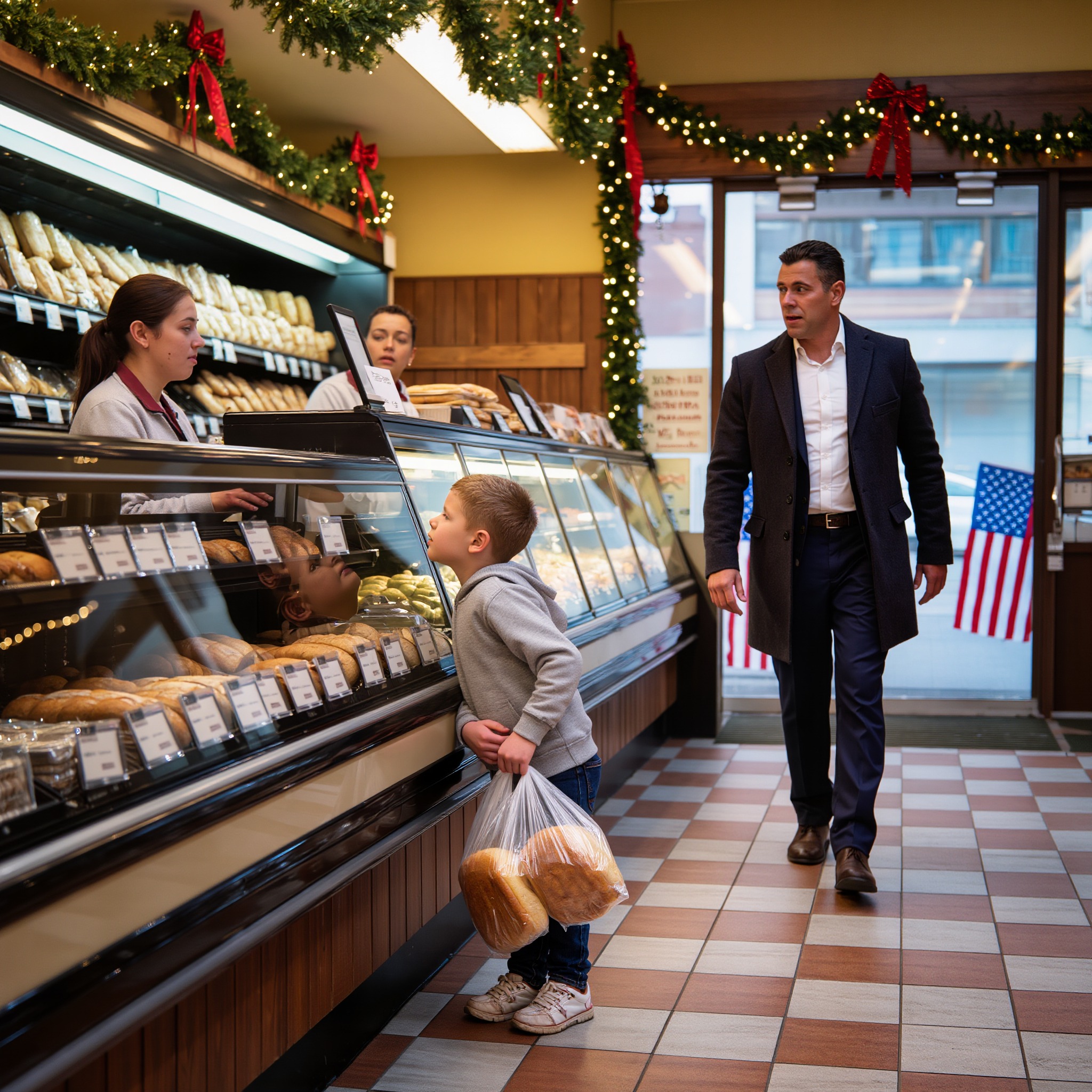
“I asked a stranger if he had any bread my mom could eat because she hadn’t eaten that day,” he said. “I was a kid. I didn’t really understand money, or pride, or how heavy that question was. I just knew my mom was hungry, and I was scared.”
He smiled, a little crookedly.
“That stranger said yes in a way that changed everything. Not just for that night, but for the rest of our lives. So now I try, whenever I can, to be the stranger who says yes for someone else.”
The reporter’s eyes softened.
“And what would you say to people who think small acts don’t matter?”
Oliver looked around the bakery. At his mother behind the counter, laughing with a regular. At Thomas in the corner, reviewing something on his tablet while Lily—grown now, a teacher, stopping in on her way home from school—told him about one of her students. At the Pay It Forward jar, still there, still filling slowly one dollar at a time.
“I’d say they’ve never seen someone’s face when the rent gets paid just in time,” he replied. “Or when a kid gets a hot meal on a night they didn’t expect it. They’ve never watched a mother breathe easier because tomorrow isn’t quite as scary. Big systems matter, sure. But so do loaves of bread and twenty-dollar bills and people who say, ‘I see you. I’ve got you for tonight.’”
That night, after the bakery closed, after the interview was filed and forgotten by everyone except the people in the story, Rachel locked the door and turned to find Thomas standing in the middle of the empty shop, hands in his coat pockets, expression soft.
“What?” she asked.
He shook his head.
“Nothing,” he said. “Just thinking about how far a single question can travel.”
Rachel flipped off the neon sign, plunging the room into the gentle glow of the streetlights outside.
“Then we’d better keep answering them,” she said.
Outside, the city moved on—sirens and taxis and laughter, a thousand stories crossing and uncrossing. Snow began to fall again, lazy and fat, dusting the awning of Golden Crust, softening the edges of the world.
Somewhere a child went to bed with a full stomach because a stranger had chosen not to look away. Somewhere a mother exhaled a breath she hadn’t realized she was holding. Somewhere a neighbor knocked on a door with a casserole in hand. Little acts, small and ordinary and world-shifting.
And in an apartment not far from the bakery, Thomas stood at the window with Lily’s old Christmas ornament in his hand, the one with Jennifer’s picture inside. He could see the faint glow of Golden Crust’s sign through the snow.
“I’m still trying,” he whispered to the glass. “To be the man you believed I was. To raise her right. To see people the way you did.”
Out in the dark, a siren wailed and faded. A car splashed through slush. In the bakery, the ovens cooled.
The world kept turning, clumsy and beautiful and unfair and full of tiny mercies.
One boy’s question still echoed through the years.
Mommy hasn’t eaten. Can you share expired bread?
And in answer, scattered across the city and far beyond, a thousand quiet yeses rose up, one after another, like prayers made of flour and sugar and stubborn, ordinary love.
See more on the next page
Advertisement
