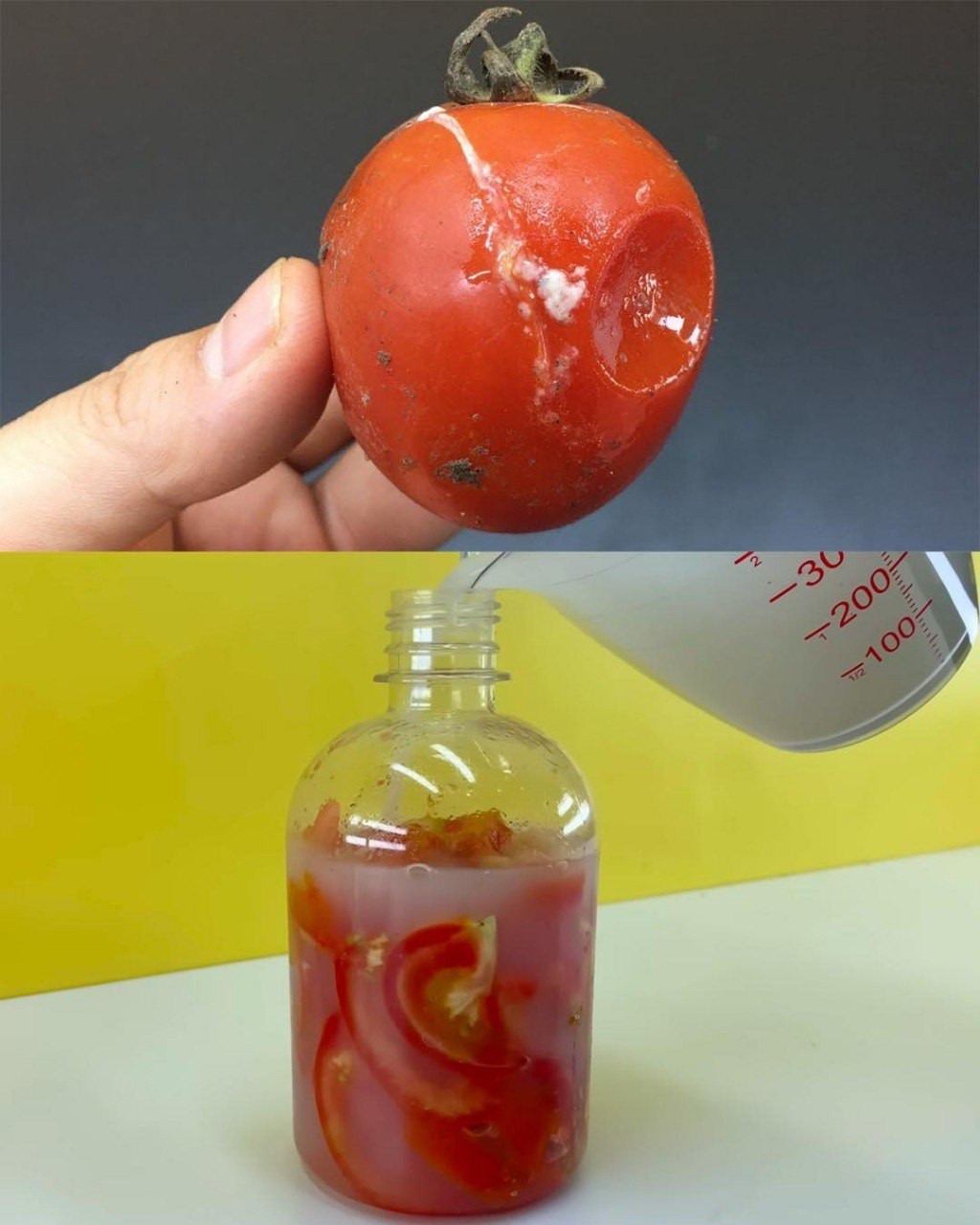
Rotten tomatoes may not be appetizing, but they’re packed with potassium, nitrogen, and organic acids that plants love. Instead of buying chemical fertilizers, you can turn spoiled tomatoes into a powerful natural plant booster.
How to do it:
- Chop the overripe tomatoes into small pieces.
- Place them in a clean plastic bottle with a secure cap. Leave some space at the top for fermentation gases.
- Add rice-rinse water (the milky water left after rinsing rice). If you don’t have this, use filtered water, but rice water works best since it’s rich in nutrients.
- Fill the bottle about 4/5 full, leaving a gap at the top.
- Shake the mixture well, then leave it in a warm, airy spot for 5–7 days.
- Open the cap daily to release gas and avoid pressure buildup.
After fermentation, strain the liquid and dilute it with clean water at a ratio of 1:5 before watering your plants. This DIY fertilizer provides essential nutrients, improves soil health, and revives weak or yellowing plants.
By recycling tomatoes this way, you not only save money but also avoid using harsh chemicals in your garden.
3. Use Rotten Tomatoes as a Natural Grease Remover
This is perhaps the most surprising use of all. The natural acids in tomatoes—such as citric, acetic, and malic acid—are effective at cutting through stubborn grease on cookware.
How to do it:
- Take a spoiled tomato and cut away the worst parts (discard any moldy sections).
- Use the remaining pulp to rub directly onto greasy pans, especially those coated with thick layers of oil.
- The mild natural acids in the tomato will break down the grease.
- Rinse with warm water, and the pan will look clean and shiny without the need for chemical dish soap.
This method is safe, natural, and gentle on your hands. It’s also a great solution for families who want to avoid chemical residues in their kitchenware.
Why These Methods Matter
See more on the next page
Advertisement
<
See more on the next page
Advertisement
