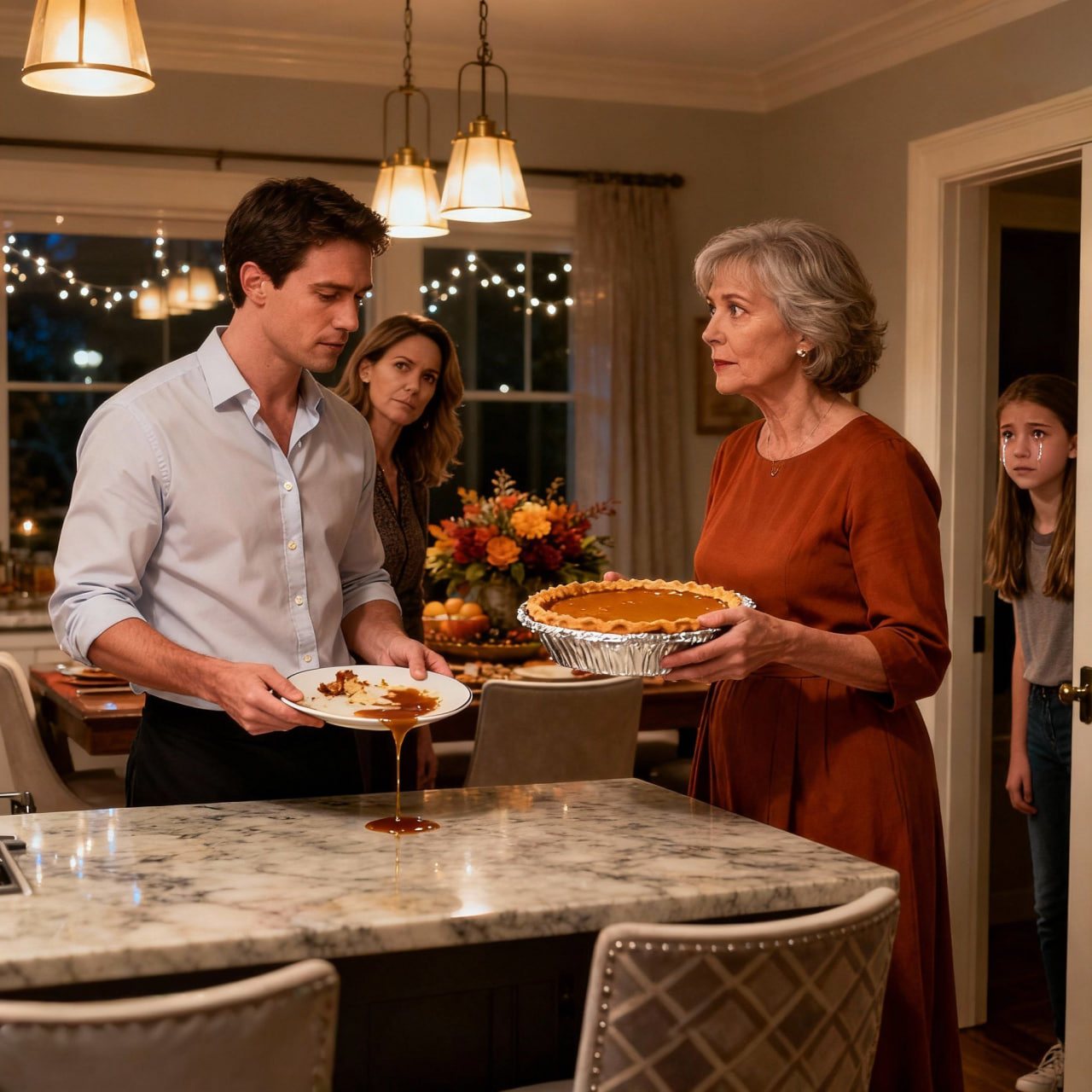
The fall wind off the Mississippi brought a chill to the Garden District where my house stood. I had inherited the old building with its veranda and openwork wrought‑iron railings from my husband, Raymond. Fifteen years had passed since a heart attack took him at the age of fifty‑five. To this day, I sometimes wake up in the morning and, for a moment, think I hear him rattling cups in the kitchen, making his signature chicory coffee.
My name is Abigail Cuttingham, but everyone calls me Abby. I’m sixty years old, and I don’t feel my age. After thirty years as an auditor for Gulf Energy Oil Company, I’m retired, but I can’t sit idle. Three times a week, I counsel clients on tax issues. My reputation in New Orleans is impeccable, so there’s no shortage of work.
I opened the window and let in the fresh air. Outside, the vibrant colors of autumn mixed with the usual humidity of our city. The magnolia in the yard had long since bloomed, but the leaves were still hanging on, shiny and dark green. It was Thursday, and I didn’t have a client meeting until the afternoon, so the morning was free. I planned to visit my granddaughter—the one person I still make peace with my son for.
The phone rang as I was finishing my second cup of coffee. Austin’s name popped up on the screen. I suppressed a sigh.
“Good morning, Mom.” His voice sounded unusually cheerful. Not a good sign. “How are you doing?”
“I’m fine,” I answered, preparing myself for what was to follow.
“Listen, uh, here’s the thing. Harper’s school bill came in for next semester. They raised the fees again. Twelve thousand a semester. It’s daylight robbery. And Payton and I are a little strapped for cash right now. You know that.”
Do I know that? Of course I do. For the last fifteen years, they’ve always been tight, but somehow they find the money for a new car. Two weeks ago, I saw Payton’s flashy SUV in their driveway.
“I understand, Austin. Of course, I’ll help with the school fees.”
“You’re the best, Mom,” he said, getting even more excited. “Why don’t you transfer today? The deadline’s tomorrow.”
“Okay, I’ll do it this afternoon.”
“Thank you. By the way, you’re coming to Thanksgiving, right? Payton wants to know how many of us are coming.”
“Of course I’ll be there. What do you want me to make?”
“Uh, you don’t need anything. We’ll do it ourselves. Just show up at four.” He hung up without saying goodbye.
I put the phone away and looked out the window. In all these years, I’d never been able to get through to my son. Austin had changed completely since Raymond’s death. He’d gone from a sweet, albeit spoiled, boy to someone for whom I was just a source of funding. First it was small payday loans, then the down payment on their house in Metairie, then private school for Harper. The list grew each year.
I opened the bank app on my phone. The amount in the account was impressive. Years of working for an oil company and prudent investments had ensured me a trouble‑free old age. But Austin was never interested in how much I had left after another “help.” He just asked, and I gave.
Twelve thousand for a semester of Harper’s tuition was a pittance compared to what I’d already invested in their family. I remembered his latest business venture, an event management company called Crescendo Events—his third in the last ten years. First, it was a web design studio, then an organic food store. Both failed despite my investment. Crescendo was in its third year, but it wasn’t profitable. Austin was always talking about some kind of breakthrough, but instead of investing in the business, he bought new cars and furniture.
After changing into a light dress—October is still warm in New Orleans—I left the house and got into my modest 2015 Toyota Camry. I never needed expensive things. Raymond had taught me to appreciate simplicity and quality. I drove out of the quiet streets of the Garden District and into the suburb of Metairie where Austin and his family lived. Their house looked immaculate, a two‑story Colonial with a perfectly mowed lawn. Payton’s new SUV gleamed in the sun.
I parked on the sidewalk, and no sooner had I gotten out than Harper came running out of the house.
“Grandma!” She threw herself into my arms. “You made it!”
Her joy was genuine, and I hugged my granddaughter tightly. Her brown hair, gathered in a high ponytail, tickled my face. At eleven, she was almost as tall as me.
“Of course I did. I promised to show you how to make real gumbo.”
“Yay! I’ve already prepared everything in the kitchen.”
We walked into the house. Payton was sitting in the living room, staring at her clipboard. She barely looked up.
“Hello, Abby. I wasn’t expecting you today.”
“I called yesterday. Said I was coming over,” I reminded her gently.
“Uh, maybe. Austin is in the office today. He has an important meeting with clients.”
I nodded and walked with Harper into the kitchen. Payton had never made much of a secret of her attitude toward me. To her, I was just a purse with legs—just like Austin. Only Harper saw me as a person.
The kitchen gleamed with new appliances. Food for the gumbo was already laid out in the middle of the table: shrimp, sausage, herbs, peppers. Harper loved to cook, and I was excited to be able to pass on family recipes to her.
“Grandma, look what I found in Mom’s things.” Harper held out an old photograph to me. It was of Raymond and me holding little Austin. All three of us were smiling.
“Daddy is so funny here.”
“That was a long time ago.” I smiled as I looked at the photo. “Your daddy was as old as you are now.”
“Was Grandpa Raymond kind?”
“Very. He loved everyone, especially your daddy. Maybe a little too much.”
I didn’t add that it was Raymond who had spoiled Austin, indulging his every whim. He always said, “Let the child have what we didn’t have.” I tried to object, but gently—not persistently enough. When Raymond died of a heart attack, Austin was twenty‑one years old. He had just graduated from college and was completely unprepared to live on his own. I took over his financial problems, hoping it was temporary. Fifteen years later, nothing had changed.
“Let’s start with the roux,” I said, pushing the sad thoughts away. “It’s the foundation of any gumbo.”
We spent two hours preparing a traditional New Orleans dish. I demonstrated; Harper repeated. She picked up everything on the fly. When the gumbo was almost done, Payton came into the kitchen.
“What is that smell?” she asked, wrinkling her nose.
“Gumbo,” Harper answered proudly. “My grandmother taught me how to make real gumbo.”
“I hope you clean up after yourself,” Payton said, disappearing into the living room.
Harper lowered her eyes. I stroked her shoulder. “Don’t worry, your mom just doesn’t understand the beauty of cooking. Let’s try what we’ve got.”
We sat down at the table and were enjoying our creation when Austin returned. He flew into the kitchen, undoing his tie as he went.
“Mom, I didn’t know you were here. Harper, what’s the mess?”
“Grandma and I were making gumbo,” my granddaughter answered quietly.
Austin glanced at the pot. “That’s it? All that fuss for one dish?”
“It’s not just a dish,” I tried to say calmly. “It’s a family tradition. Your father loved gumbo.”
“Yes, yes, of course,” he said with a wave of his hand. “By the way, did you wire the money for school?”
“Uh, not yet. I’ll do it tonight.”
“It would be nice to do it now,” he insisted. “I want to close this matter.”
I silently pulled out my phone and opened the banking app. I transferred twelve thousand into his account, showing him the screen.
“Great,” he said, glowing. “Listen, while you’re here, could you pick up Harper from school tomorrow? Payton and I have an important meeting, and the school bus breaks down every week.”
“Sure,” I agreed, looking at my granddaughter.
Her face lit up with joy again. “Great. I’ll see you tomorrow then.”
He disappeared again without even tasting the gumbo.
Harper looked at me, guilty. “Grandma, can I come visit you this weekend? We could bake your chocolate chip cookies.”
“Sure, sweetie. Just ask your parents for permission.”
I knew Austin wouldn’t say no. For him, my house was a free weekend babysitter—a break from parenting. As I left, Harper stood on the porch and waved. I waved back, fighting the lump in my throat. My granddaughter was the only reason I still tolerated Austin’s attitude. For her sake, I was willing to keep paying.
On the drive home, I reflected on how much my son had changed. In college, he was the soul of the group, always surrounded by friends. Raymond spoiled him, but Austin retained some sincerity and warmth. Everything changed after his father died. It was as if the anchor that kept his character in line had disappeared. Or maybe I just didn’t want to see the real him.
When I got home, I got ready for a client meeting—an elderly couple preparing for retirement wanted advice on tax optimization. It was a familiar situation. After thirty years at Gulf Energy, I could make a tax minimization plan with my eyes closed.
In the evening, I sat on the veranda sipping mint tea and looking outside. The neighbors were decorating their houses for Halloween, which was just over a week away. Our neighborhood took it seriously: garlands, pumpkins, skeletons, and ghosts. Raymond and I used to decorate the house, too, throwing parties for the neighbors. Now, I just put a basket of candy on the porch for the kids.
The phone rang again. This time, it was Laurel, an old friend of mine. We met in college, and we’ve kept in touch ever since.
“Abby!” Her voice was as energetic as ever. Laurel was in her sixties, practicing yoga, traveling, and had recently had an affair with a golf instructor. “Would you like to have a drink with me on Saturday?”
“I’d love to.” I smiled. “Harper’s coming over in the afternoon.”
“Great. You both come. I’ll bake my famous maple syrup cupcakes. How’s she doing, by the way?”
“Growing up. She’s starting to look more and more like Raymond.”
“And Austin still milking the mama cow.”
Laurel was never one to mince words. She told me from the beginning that I spoiled my son too much, especially after Raymond died.
“You know him,” I sighed. “He asked for money for Harper’s school again today.”
“And of course, you gave it to him.”
“What am I supposed to do? Refuse? Then Harper would get hurt.”
“Oh, Abby.” Laurel sounded annoyed. “You know as well as I do that you could have sent the money directly to the school or set up an education account for your granddaughter, but you keep indulging your son.”
She was right, and I knew it. But something was keeping me from putting a stop to this unhealthy relationship with Austin. Maybe guilt over not raising him right, or the fear of losing my last connection to my family.
“You know, I tried talking to him many times. He always promises that this is the last time, that his business is about to take off.”
“And you believe that?” Laurel interrupted. “Abby, you know better than anyone that his company is a black hole for money. He just doesn’t know how to run a business. He doesn’t want to learn.”
“I know,” I said quietly. “It’s just—it’s complicated.”
“Of course it is. But someday you’re going to have to say no. Or do you plan to support him until the day you die?”
I didn’t say anything.
Laurel sighed. “I’m sorry, honey. I didn’t mean to upset you. It just hurts me to see him taking advantage of you.”
“It’s okay. You’re right, and I know it. I just can’t find the strength to change things.”
We talked some more and said goodbye. I stayed sitting on the veranda, staring out at the falling‑asleep street. My thoughts swirled around the same thing. Laurel was right. I’d been letting my son manipulate me for years. The question was whether I had the resolve to change things.
The next day, I picked Harper up from school. She ran out to me laden with a backpack and a folder of drawings.
“Grandma, look.” She handed me a piece of paper with a family drawn on it. “That’s all of us at Thanksgiving.”
I looked at the drawing. Austin, Payton, Harper, and I were sitting at the table smiling. In the center stood a large turkey. A perfect picture that had nothing to do with reality.
“It’s beautiful, sweetie.” I hugged my granddaughter. “Where should I take you? Home?”
“Can I go to your place? Mommy said she’s having a spa day with her friends today, and Daddy will be late.”
Of course, they hadn’t even told me. They just took it for granted that I’d be free.
“Of course,” I said.
They came over to my place. We spent the evening doing homework and making dinner. Harper talked about school, about her friends, about the books she was reading. I listened, wondering how such selfish parents raised such a sensitive child.
Austin came to pick her up around nine in the evening. He didn’t apologize for being late. He didn’t thank me for spending the day with her. He just picked her up and drove off, saying, “Don’t forget Thanksgiving on Thursday.” As if I could forget.
The week before Thanksgiving, New Orleans transformed. The storefronts were decorated with fall ornaments, and images of turkeys and pumpkins were everywhere. I have always loved this holiday, a time of family traditions and gratitude for all the good things in life. In our family, Thanksgiving was always special. Raymond would get up at the crack of dawn to start cooking the turkey. I would make sweet potatoes with marshmallow and pumpkin pie. Fifteen years had passed, and I was still keeping those traditions alive.
In the morning, I made a shopping list: turkey, cranberries, sweet potatoes, pumpkin, pecans for the pie, and marzipan for the decorations—the standard set for the holiday table. This year, I decided to also make cornbread using Raymond’s grandmother’s recipe. Harper loved it.
The supermarket was full of people. Everyone was getting ready for the holiday, and the carts were full of groceries. I moved methodically from department to department, picking out the best ingredients. In the meat department, I looked at the turkeys for a long time, finally choosing a small but well‑fed bird. At the register, the sum came out impressive—almost two hundred fifty dollars just for groceries. But I didn’t skimp on the holiday table.
After the supermarket, I went to the shopping center. I wanted to buy gifts for my family. The tradition of giving little Thanksgiving surprises started with Raymond and me when Austin was a baby. Now my son and daughter‑in‑law would probably consider it overkill, but I wanted to please Harper.
At the bookstore, I picked out an illustrated encyclopedia of marine animals for my granddaughter. She’s recently taken up oceanography. For Austin, an expensive leather‑bound day planner. For Payton, a silk scarf in a neutral beige color. She rarely wore my gifts, but I held out hope that I’d make a good guess.
At home, I laid out my purchases and wondered. In years past, we’d always celebrated Thanksgiving at my place. The house in the Garden District was roomier than Austin and Payton’s first apartment. But three years ago, when they bought their current house, the tradition changed. Now I visited them, bringing part of the meal. This year, Payton insisted they cook everything themselves. I doubted she knew how to cook the traditional dishes, but I didn’t argue.
Laurel called in the evening and suggested we meet for lunch tomorrow. I agreed. I had just the window between client meetings. Laurel was the only person I could talk frankly about Austin with. She had known him since he was a kid and wasn’t shy about voicing her opinion.
The next day, we met at a small café in the French Quarter. Laurel looked amazing—trim figure, stylish haircut with silver strands, bright scarf. She always looked after herself, unlike me. I preferred comfort to style.
“Abby, Abby, you look tired,” she said instead of greeting me. “What’s wrong—Austin again?”
“Nothing much,” I shook my head. “Just a lot of work before the holidays. Everyone wants to close out tax issues before the end of the year.”
“How much money have you spent on Thanksgiving so far?” Laurel looked at me skeptically.
“The usual amount,” I shrugged. “Groceries, gifts.”
She rolled her eyes. “Abby, why are you buying them presents?”
“It’s tradition,” I defended myself, even though I knew she was right. “Raymond always gave little surprises at Thanksgiving.”
“Raymond died fifteen years ago,” Laurel said softly. “Your son’s grown up and, frankly, he didn’t grow up to be a very good man.”
I sighed. It hurt to hear it, but Laurel was just voicing what I’d been thinking in my moments of honesty with myself.
“I know he’s using me,” I admitted quietly.
“But he’s my only child, and he has Harper—”
“—whom you can support without funding their irresponsible lifestyle,” Laurel finished. “I’m sorry, honey, but someone has to tell you the truth. Austin is used to getting whatever he wants. First from Raymond, now from you. He’ll never change as long as you keep giving him money.”
I was silent, fiddling with my coffee cup. Memories came suddenly of little Austin throwing a tantrum at the toy store because I refused to buy him another car. Raymond sneaking back to the store to buy that toy after all. Teenager Austin demanding an expensive cell phone because everyone else had one. Student Austin who crashed his car and expected us to buy a new one.
“Remember when he got into Tulane?” I asked Laurel. “How proud Raymond and I were of him.”
“I do,” she nodded. “And I remember when he dropped out in his third year and decided he wanted to travel Europe, and you paid for that trip.”
“Raymond insisted,” I defended myself. “He said the boy needed to broaden his horizons.”
“Of course,” Laurel said, shaking her head. “And then Austin came back and graduated in six months, which was a miracle. And then Raymond died. And you were left alone with a son who was used to getting everything at once.”
I remembered the first months after my husband’s death. Grief clouded my mind. I moved in a fog. And Austin—Austin demanded attention, money, support. His life couldn’t stop because of his father’s death. He had just met Payton. They were planning to move in together. He needed money for rent, for furniture, for a car.
“Do you know how much I’ve already invested in his businesses?” I looked at Laurel. “Almost two hundred thousand over the last ten years. First the web studio, then the organic store, now this event management company.”
“And none of them have turned a profit because Austin doesn’t know how to work and doesn’t want to work,” Laurel cut in. “He wants to be the boss without putting in the effort. And why would he change? He has you as his eternal source of funding.”
I knew she was right, but something inside me was fighting it. Maybe guilt that I hadn’t raised him right. Or the fear of being all alone without a family.
“What do I do, Laurel?” I asked, feeling helpless.
“Stop giving him money,” she said simply. “Say no just once. See what happens.”
We talked some more and parted ways. I went home thinking about what my friend had said. Maybe she was right. Maybe it was time to stop being an ATM for my son.
In the evening, I pulled out my old photo albums. I flipped through the pages, watching Austin grow up. There he was, a newborn, a tiny little bundle in my arms. Here were his first steps. First day of school, graduation. Raymond looked adoringly at his son in all the pictures. He was so proud when Austin got into Tulane.
What would Raymond say if he saw what our son had become? Would he support my decision to continue to help him financially? Or would he agree with Laurel? I didn’t know the answer to that. Raymond loved his son unconditionally, spoiled him, but he also valued hard work and responsibility. He’d worked for the same company for thirty years, rising from junior engineer to CTO. He saved for retirement, planned for the future, took care of his family.
What about me? What have I accomplished by indulging my son? I’d raised a selfish man who saw me only as a source of money.
The next day, I started preparing for the party. I decided to make pumpkin pie and sweet potatoes, even though Payton said they’d do it all themselves. I couldn’t imagine Thanksgiving without these traditional dishes of our family.
That evening, as I was finishing up the pie, Austin called. His voice sounded excited.
“Mom, hi. What’s up? Are you getting ready for the party?”
“Yeah, I’m baking a pie,” I answered, tensing up. That tone usually preceded a request for money.
“Listen, there’s a situation.” He paused. “A great business opportunity has come up for me. You know River City Events? They’re selling some of their equipment—lights, sound—practically brand‑new. They need the money fast, so they’re letting it go at half price. It’s a chance to take Crescendo to the next level.”
I kept silent, already knowing where he was going.
See more on the next page
Advertisement
